
Visit our UK website


X ray digital radiography is becoming an important part of modern dental care in India. Many clinics are gradually moving from traditional film imaging to digital systems that provide faster results and clearer images. With x ray digital radiography, dentists can review images instantly, explain diagnoses more easily and support more accurate treatment planning. As digital dental technologies continue to expand, radiography is playing a growing role in improving workflows, patient communication and everyday clinical decision making.
If you visit many dental clinics in India today, you might notice a small but interesting change. A patient sits in the chair, the dentist positions a sensor, and within seconds the image appears on a nearby screen.
No waiting. No film processing. Just a clear image ready to examine.
This shift is largely due to x ray digital radiography.
For many dental clinics, the transition has not happened overnight. It usually begins with a single investment, perhaps a digital X ray unit, then slowly expands into a broader digital dental workflow. But once the technology becomes part of daily practice, dentists often find that it changes how they diagnose, communicate and plan treatment.
And in a country where dental services are growing rapidly, these improvements are starting to play a noticeable role.
India’s dental sector has been expanding steadily, driven by rising awareness of oral health, increasing urbanisation and a growing demand for cosmetic dentistry.
This growth is reflected in the technology market as well. The India dental digital X ray market was valued at around USD 105.3 million in 2025 and is expected to reach more than USD 308 million by 2034, reflecting strong demand for advanced imaging in dental clinics.
That trend is also visible inside dental practices.
More clinics are incorporating x ray digital radiography into routine consultations because it allows dentists to see detailed images instantly. Instead of waiting for film development, the dentist can review the image immediately, adjust contrast if necessary, and explain findings to the patient in real time.
In many ways, dentistry radiography is evolving from a background diagnostic tool into something that actively supports the consultation itself.
Digital imaging rarely exists on its own. Once a clinic introduces x ray digital radiography, it often becomes part of a wider digital ecosystem.
Patient records may be stored electronically. Treatment plans can be documented digitally. Images can be shared easily between clinicians.
Across India, this shift towards digital dental workflows has accelerated significantly. In fact, digital tools in dental clinics have increased by more than 40%in urban practices over the past few years, particularly technologies such as digital radiography, intraoral scanners and 3D imaging.
What is interesting is how gradually these changes usually happen. A clinic might begin with imaging upgrades, then later introduce digital treatment planning or online appointment systems. Over time the practice becomes more connected.
You could say that digital dentistry is spreading through small steps rather than dramatic transformations.
From a clinical perspective, digital imaging brings several practical advantages.
In dentistry radiography, digital systems allow dentists to zoom into specific areas, adjust brightness or contrast and store images safely within the patient record. These features can make subtle conditions easier to identify.
Early caries, bone loss around teeth, or changes near implants may become clearer when images can be examined in detail.
Another point often mentioned when discussing x ray digital radiography is radiation exposure. Digital sensors generally require lower radiation levels than traditional film systems, which can provide additional reassurance for both dentists and patients.
While dental X rays already involve very small doses, any improvement in safety and efficiency is usually welcomed by clinicians.
Alongside these changes inside clinics, laboratories are also evolving.
Across India, digital dental labs are becoming more common, particularly in larger cities where implant dentistry, orthodontics and cosmetic procedures are expanding quickly. These laboratories use CAD software, digital scans and sometimes even 3D printing to produce crowns, bridges and aligners.
Radiographic imaging fits naturally into this environment.
When dentists capture images using x ray digital radiography, those images can easily be stored, shared or integrated with digital treatment planning systems. In complex treatments such as implants, imaging data may help guide surgical planning and laboratory design.
The connection between clinics and digital dental labs is becoming increasingly seamless, which ultimately helps speed up treatment workflows.
Interestingly, the shift towards digital dental systems is also influenced by patients.
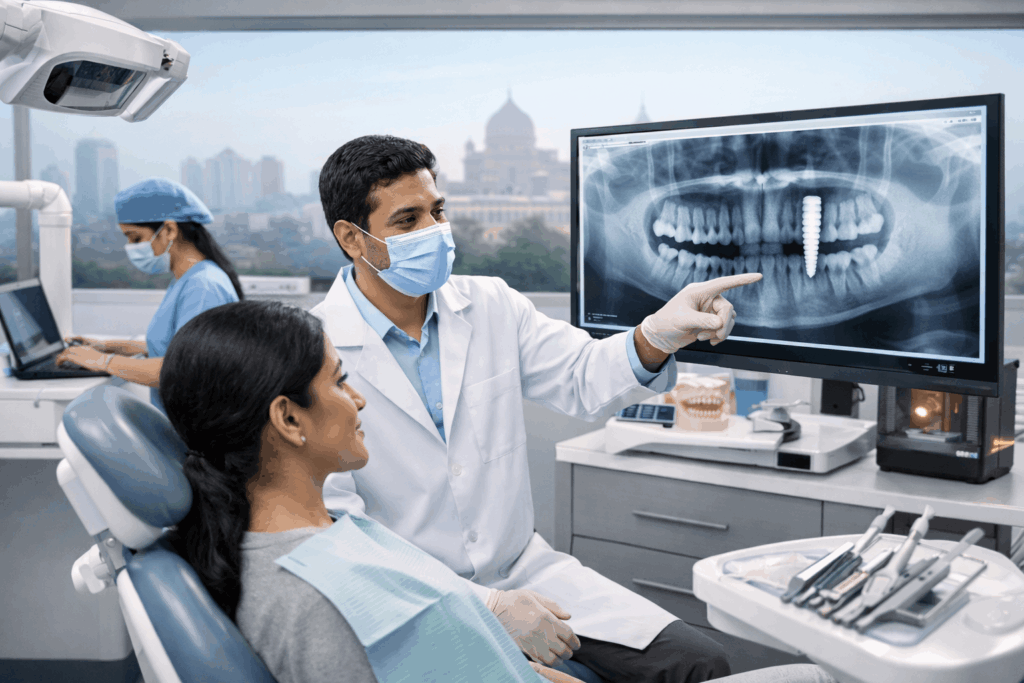
Many patients today expect healthcare services to be faster, clearer and more transparent. When x ray digital radiography is used, dentists can show the image directly on screen and explain what is happening.
That moment of visual explanation often changes the conversation.
Patients can see the problem rather than just hearing about it. In many cases, that makes treatment decisions easier and more confident.
In a country as large and diverse as India, where dental awareness continues to grow, these small improvements in communication can make a meaningful difference.
Looking ahead, it seems likely that x ray digital radiography will continue to expand across Indian dental clinics.
The wider dental imaging market in India is projected to grow significantly in the coming years, reflecting the increasing role of technology in diagnosis and treatment planning.
Of course, adoption may not happen at the same pace everywhere. Smaller clinics or rural practices may introduce digital tools gradually.
But the direction is fairly clear.
As dentistry radiography, digital dental workflows and digital dental labs continue to evolve, dental care in India is becoming more connected, more precise and, perhaps most importantly, easier for patients to understand.
Sometimes technological change in healthcare happens quietly. Not through dramatic breakthroughs, but through steady improvements that slowly reshape everyday practice.
Digital radiography seems to be one of those changes.
Many dental clinics are now exploring how digital tools can support diagnosis, patient communication and everyday practice management.
If you are interested in learning how digital platforms can support digital dental workflows and help streamline operations for dental clinics, you can visit our page to learn more about how we support dental clinics in India.
What is x ray digital radiography in dentistry?
X ray digital radiography is a modern dental imaging technology that captures X ray images using digital sensors instead of traditional film. The image appears instantly on a computer screen, allowing dentists to review, zoom and adjust the image for clearer diagnosis. Many dental clinics are adopting x ray digital radiography because it speeds up consultations and helps dentists explain treatment needs more clearly to patients.
How is x ray digital radiography different from traditional dental X rays?
Traditional dental X rays rely on film that must be processed before the image can be viewed. With x ray digital radiography, the image is captured electronically and appears almost immediately. Dentists can adjust brightness, zoom into specific areas and store images digitally within patient records. This often makes the diagnostic process faster and more convenient for both dentists and patients.
Is x ray digital radiography safe for dental patients?
Yes, x ray digital radiography is considered safe and is widely used in modern dental clinics. Digital sensors typically require lower radiation levels compared with traditional film based X rays. While dental X ray exposure is already very small, digital systems can further reduce the dose while still producing high quality diagnostic images.
Why are more dental clinics in India adopting x ray digital radiography?
Many dental clinics in India are moving towards x ray digital radiography because it supports faster diagnosis, easier image storage and improved communication with patients. Digital images can also be shared easily with specialists or digital dental labs when planning treatments such as implants or orthodontics. As more clinics adopt digital dental technologies, radiography is becoming an important part of the modern dental workflow.